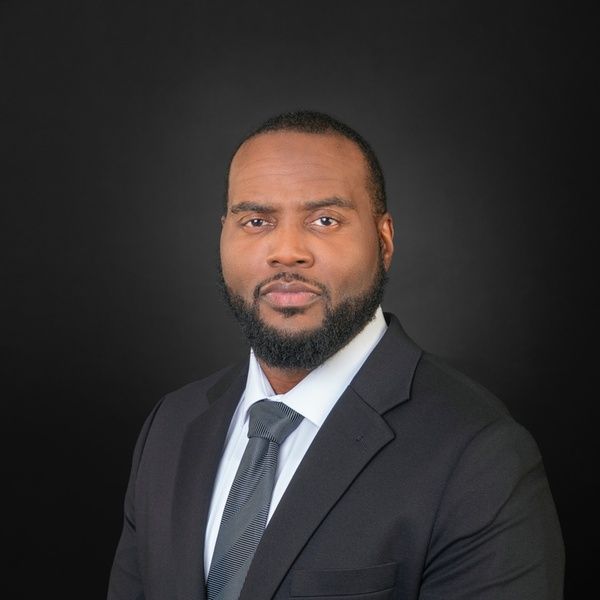
Are you a hobbyist? Interpreted literally, a hobbyist is a person dedicated to pursuing a certain hobby — an activity regularly engaged in for pleasure during leisure hours. Do you consider yourself a hobbyist?
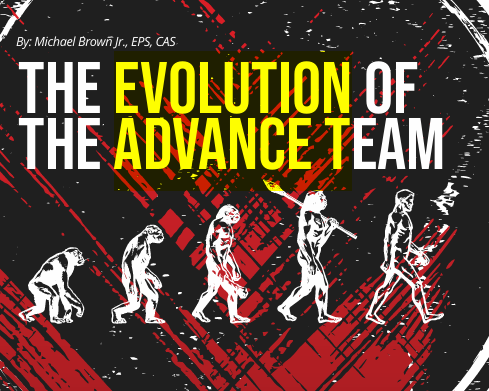
The point of human evolution is adapting to circumstances, not letting go of the old, but adapting it is necessary. This quote by Sonali Bendre illustrates the transformation of executive protection, more specifically, the role of an advance specialist. Bodyguarding is one of the oldest professions and has evolved and modernized with new technologies and methodologies. One major change is shifting from being reactive to proactive. Over time, we have witnessed the shift from musclebound men to more functionally fit individuals and have even seen the profession become more inclusive to females. History has taught us it takes more than muscles or firepower to stop an attack. Years of case studies and analysis have proven that an individual’s survivability chances decrease during an initial attack. The best course of action is to avoid the attack. We have lost countless lives learning this lesson and have now begun accepting the role of an advance specialist. The major difference between the stereotypical bodyguard and an executive protection specialist is protective advance work, which shifts the scale to a proactive response versus a reactive one. What is protective advance work? Protective advance work is when a specialist advances all known locations and routes of the protectee’s itinerary before the visit. A full protective advance includes an itinerary, site survey, route mapping, and emergency planning. The protective advance is field gathering protective intelligence. It establishes baselines of the environment to help determine anomalies. Identifying anomalies in real-time gives you a tactical advantage over the attacker, which is crucial in staying “left of bang.” Through the evolution of executive protection, protective advance work has become more critical to the success and failures of a protective detail. In executive protection, details are smaller than ever due to budget constraints. Now, two to four men details are typical in all protection sectors. However, reducing the size of your protective footprint leaves holes in your security apparatus, leaving your protectee vulnerable. With threat matrixes always shifting, how does one stay acquainted? One of the most significant positions on the protective team is a protective advance specialist, as part of the overt security team. This individual pushes ahead days or hours before the arranged visit to conduct the protective advance, operating as a single or 2-man team to generate the protective advance documents to share with the team. With proper training and experience, we could take a small security footprint and make it more impactful. Over the last two years, I have been a part of a global advanced team with expanded capabilities, supporting one to four men protective details internationally in semi or non permissive environments. I function like a regular protective advanced specialist with additional responsibilities in this role. I’m tasked with performing covert protection (CovPro), technical countersurveillance measures (TCSM) and surveillance detection (SD). Having a protective advance team that can perform multiple functions without sacrificing the integrity and safety of the protectee. The protective advance specialist will deploy three days early, conducting a full protective advance site survey of all known locations, route mapping, and emergency planning. During this time, they will run all routes with assigned drivers. They will conduct area familiarization mapping of the environment, learning the baseline and atmospherics to spot anomalies upon the protectee’s arrival. The protective advance specialists would assist, supervise, and secure all TCSM sweeps of all private locations. The security posture will be determined depending on the protective intelligence data and threat assessment information. The protective advance specialist will either fall into acovert protection role or a surveillance detection position, expanding the capabilities of the security apparatus. These are just examples of the evolution and application of the protective advance specialist. The days of sending one person to construct a Word document or PDF file are over. A protective advance should be a living document, not a static paper. With the security threat landscape changing across all platforms, we have to take advantage of utilizing the protective advance specialist or team, with their capabilities being dynamic like the world we live in. Michael Brown, CAS, is a certified anti-terrorism specialists and executive protection specialist primarily focused on global protection missions for multi-national corporations and organizations. Prior to entering this protective space, Michael has spent extensive time operating in the High-Profile Celebrity Protection segment of the marketplace.
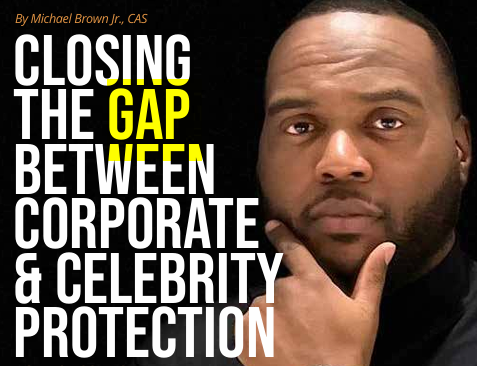
I landed back into Signature FBO in California, clearing customs after a busy couple of days. While reflecting on the assignment just completed, I realize I had traveled to New York, Florida, Mexico, and back to California in just three days’ time. During the Protectees’ visits, we had a product showcase event, business meeting with a multi-national corporation, and a product production visit at a facility in Mexico. Feeling exhausted, I still had to coordinate the pick-up and drop-off of the protectee from FBO to RON. Shortly after the mission was completed, I walked out of the private FBO and headed to my hotel for some much needed rest. Despite all of this, many would still call me just a celebrity protection guy?! Many executive protection (EP) specialists from other niches of close-in protection look down on celebrity focused EP specialists because of the type of clientele they service and the stigma associated with celebrities. The celebrity’s lifestyle often involves long nights in night clubs, short notice travel, and lack of support staff making the EP specialist responsible for a multitude of things outside of their traditional job duties while also, filling in the gap for the lack of support staff. After 12 years of experience protecting high-profile globetrotting celebrities around the world, I have acted as a Personal Assistant, Travel Agent, Tour Manager, Jet Broker, and much more. Although, I would argue that, outside of my normal responsibilities and job title, learning these additional skillsets have made me invaluable asset to any security operation. Oftentimes, celebrity protection operations are solo details, due to tight budgets and additional cost, limiting the type of EP specialists who can perform the role. Generally, many specialists have unique skillsets and backgrounds that they bring to the business, such as knowledge of a foreign language, concierge, event planning, or others. The celebrity protection niche requires someone who is a jack of all trades. In comparison, corporate protection allows for additional resources like protective intelligence, TCSM, protective advance teams, medical staff, and dedicated travel agents. These resources make the job of an EP specialist in corporate a lot smoother, and make it harder for a corporate focused EP specialist to transition into celebrity protection. I have personally hired corporate EP focused specialists before for celebrity protection assignments and found them unable to keep up with the dynamic pace of celebrity protection. The celebrity EP specialist nimbleness and flexibility allows for them to easily transition into different niches within the executive protection platforms. However, the gap between celebrity and corporate protection is closing right before our eyes. Many global security programs are hiring specialists with high-end celebrity protection or tour security backgrounds more and more. Why? It’s simple. These specialists operate in dynamic environments making them experts in adaptability and planning. Most of the high-end celebrity protection specialists have specific training and real-world experience that many corporate focused EP specialist don’t have due to the robust nature of a corporate EP program. I have personally made the transition myself from celebrity protection to now working in a Fortune 10 corporation global security program. I was shocked to see how many other specialists with my background were in the corporate global security world. From my perspective, many corporations are starting to realize the need for someone who understands both the high profile and corporate protection worlds. like high-profile celebrities due to social media platforms and general accessibility to them. The days of protecting a CEO that nobody would recognize in the streets are over. Having someone with an array of EP experiences is key to helping mitigate the new inherent risk of the high visibility of corporate executives. and recognize that more platforms can transfer over to corporate EP programs then generally perceived. There is a high value that experienced, high-profile celebrity focused EP specialists, can bring to a corporate program. Offering different perspectives, this type of talent can more rapidly help transition a corporate program into a more multifaceted program that is more adaptable to the times we are in. Michael Brown, CAS, is a certified anti-terrorism specialists and executive protection specialist primarily focused on global protection missions for multi-national corporations and organizations. Prior to entering this protective space, Michael has spent extensive time operating in the High-Profile Celebrity Protection segment of the marketplace.