
Are you a hobbyist? Interpreted literally, a hobbyist is a person dedicated to pursuing a certain hobby — an activity regularly engaged in for pleasure during leisure hours. Do you consider yourself a hobbyist?
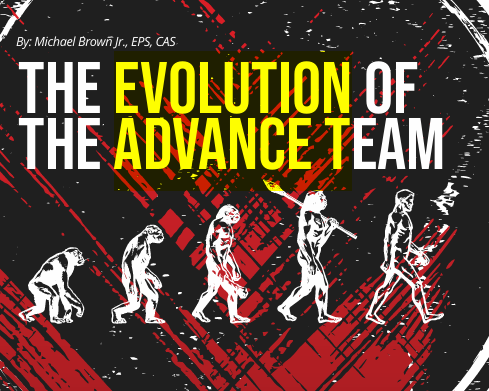
The point of human evolution is adapting to circumstances, not letting go of the old, but adapting it is necessary. This quote by Sonali Bendre illustrates the transformation of executive protection, more specifically, the role of an advance specialist. Bodyguarding is one of the oldest professions and has evolved and modernized with new technologies and methodologies. One major change is shifting from being reactive to proactive. Over time, we have witnessed the shift from musclebound men to more functionally fit individuals and have even seen the profession become more inclusive to females. History has taught us it takes more than muscles or firepower to stop an attack. Years of case studies and analysis have proven that an individual’s survivability chances decrease during an initial attack. The best course of action is to avoid the attack. We have lost countless lives learning this lesson and have now begun accepting the role of an advance specialist. The major difference between the stereotypical bodyguard and an executive protection specialist is protective advance work, which shifts the scale to a proactive response versus a reactive one. What is protective advance work? Protective advance work is when a specialist advances all known locations and routes of the protectee’s itinerary before the visit. A full protective advance includes an itinerary, site survey, route mapping, and emergency planning. The protective advance is field gathering protective intelligence. It establishes baselines of the environment to help determine anomalies. Identifying anomalies in real-time gives you a tactical advantage over the attacker, which is crucial in staying “left of bang.” Through the evolution of executive protection, protective advance work has become more critical to the success and failures of a protective detail. In executive protection, details are smaller than ever due to budget constraints. Now, two to four men details are typical in all protection sectors. However, reducing the size of your protective footprint leaves holes in your security apparatus, leaving your protectee vulnerable. With threat matrixes always shifting, how does one stay acquainted? One of the most significant positions on the protective team is a protective advance specialist, as part of the overt security team. This individual pushes ahead days or hours before the arranged visit to conduct the protective advance, operating as a single or 2-man team to generate the protective advance documents to share with the team. With proper training and experience, we could take a small security footprint and make it more impactful. Over the last two years, I have been a part of a global advanced team with expanded capabilities, supporting one to four men protective details internationally in semi or non permissive environments. I function like a regular protective advanced specialist with additional responsibilities in this role. I’m tasked with performing covert protection (CovPro), technical countersurveillance measures (TCSM) and surveillance detection (SD). Having a protective advance team that can perform multiple functions without sacrificing the integrity and safety of the protectee. The protective advance specialist will deploy three days early, conducting a full protective advance site survey of all known locations, route mapping, and emergency planning. During this time, they will run all routes with assigned drivers. They will conduct area familiarization mapping of the environment, learning the baseline and atmospherics to spot anomalies upon the protectee’s arrival. The protective advance specialists would assist, supervise, and secure all TCSM sweeps of all private locations. The security posture will be determined depending on the protective intelligence data and threat assessment information. The protective advance specialist will either fall into acovert protection role or a surveillance detection position, expanding the capabilities of the security apparatus. These are just examples of the evolution and application of the protective advance specialist. The days of sending one person to construct a Word document or PDF file are over. A protective advance should be a living document, not a static paper. With the security threat landscape changing across all platforms, we have to take advantage of utilizing the protective advance specialist or team, with their capabilities being dynamic like the world we live in. Michael Brown, CAS, is a certified anti-terrorism specialists and executive protection specialist primarily focused on global protection missions for multi-national corporations and organizations. Prior to entering this protective space, Michael has spent extensive time operating in the High-Profile Celebrity Protection segment of the marketplace.

In the era of social media and lying on your captions, for the sake of “faking it until make it,” many “EP Specialist” are being hired not based on their skillsets or qualifications but strictly off their social media following. We’ve entered into a generation of social fame. The more followers we have on social media dictates how successful we are in our respected industry. I have seen this f irst hand in the celebrity protection sector. Managers and artist are using social media to hire individuals and are often forgoing following recommended hiring procedures like: ordering background checks, verifying state licensing and credentials, and ensuring there is proper insurance coverage, etc. Bypassing the proper hiring procedures can be detrimental to your organization. It would be devastating to hire a personnel and then find that the armed security personnel around the protectee is a felon and/or the company does not have the proper insurance coverage nor license to handle a liability. here have been many incidents in the entertainment industry where clients have suffered the consequences of hiring inadequate security, leading to lawsuits, embarrassments and protection failures. I’ve personally have known of a security company who did not follow proper hiring procedures and unintentionally hired a convicted felon while the client was on probation. The repercussions of this oversight could have cost the client his career and worse led him back to prison. Why are these scenarios still happening? The only thing that makes sense to me, is that people lack knowledge. The bible states in Hosea 4:6, “My people perish for lack of knowledge,” if God felt the necessity to share this revelation with us then I too must educate our potential clients to avoid them from making perishable decisions. In life we educate ourselves before purchasing products or services but do not seem to follow the same steps when seeking security. Most security professionals will tell you what you want to hear but not what you need to know. Here are some general things to look for in hiring a security service provider: – In the US, many security firms will mislead clients on their operational capabilities, telling clients they can work in all 50 states with their license, this is not true at all. The only way to work in all 50 states is to have a vetted-network of licensed vendors that can pick up the security coverage outside of security firm’s operational area or state. Make sure the company you hire has an active security license in the state they’re operating in. – A security company can have an insurance policy that covers the security company in multiple states, however, the states outside of the issuing state can still require for the policyholders to have official license and permits within the operating state. This can be misleading because although the security company is insured in multiple states there could be different regulations required in each state, ultimately leaving security company’s open to liabilities. This is why it is so important to partner with vetted vendors in the operational state. It is also key to ensure the security firm is properly insured and that their insurance is current and up-to-date. -Every state has a form of guard card or background check requirement, hiring through a license security firm helps ensure you are not hiring someone with a felony or with a criminal background. Beware of hiring someone with no security credentials that could mean that the individual cannot pass a background check. – One of the biggest myths in security in the US is that an armed security license, conceal carry permit, or LEOSA “HR218” from one state will cover you in every other state. A security exposed “armed” license is only good in the state it is issued in. Conceal carry licenses are for “personal” use only not for work. LEOSA “HR218” is a national security act passed in 2004 for any “good standing” police officer active or retired that allows them to carry in all 50 states but the bill clearly states,“not for monetary gain/work.” Many clients hire retired or off-duty police officers because of their 52 misunderstanding of this act. If the police officer uses his weapon on a protection detail, the officer and employer will be open for criminal and civil charges for violation of the law. – If security personnel are driving, they should be insured under a separate commercial automotive policy aside from the security company’s general liability policy. Most general liability policies cover the security company’s standard business operations which may not include driving the client’s vehicles. – Proprietary teams are in-house security teams exclusive to a specific corporation, under the guidance of a director of security. These security teams are insured through the corporation which takes on all civil and legal liabilities. The majority of these organizations’ protective details are unarmed, due to the legalities/liability reasons; when they need additional support, they partner with security firms in the state they are traveling to. In summary, it is important for management teams and decision makers to be well informed and equipped to make important decisions such as choosing a security firm. There can be costly consequences to making a poor decision. Above, I listed basic points to consider before hiring a security company. Be mindful of not getting caught up in the fluff of “big names” and social media followers but be cautious of the misleading and grey areas of securing your client. Michael Brown, CAS, is a certified anti-terrorism specialists and executive protection specialist primarily focused on global protection missions for multi-national corporations and organizations. Prior to entering this protective space, Michael has spent extensive time operating in the High-Profile Celebrity Protection segment of the marketplace.